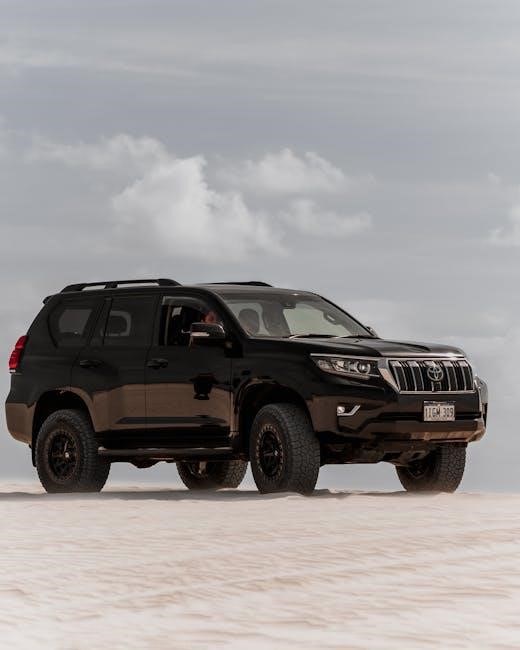
Toyota Highlander owners can access comprehensive manuals online, offering detailed guidance for operation, maintenance, and troubleshooting. These resources, including the 2017 edition, are freely available.
Overview of the 2017 Highlander
The 2017 Toyota Highlander represents a versatile and reliable mid-size SUV, known for its spacious interior, comfortable ride, and strong safety ratings. Offered in both front-wheel and all-wheel drive configurations, it caters to diverse driving needs. Engine options typically include a 2.7-liter four-cylinder and a more powerful 3.5-liter V6, providing a balance of fuel efficiency and performance.
This model year continues Toyota’s commitment to family-friendly features, boasting ample cargo space and available third-row seating. Accessing the 2017 Highlander’s owner’s manual is crucial for understanding its specific features, operation, and maintenance requirements. Online databases like CarManualsOnline.info provide free access to these valuable resources, ensuring owners can maximize their vehicle’s potential and longevity.
Importance of the Owner’s Manual
The 2017 Toyota Highlander owner’s manual is an indispensable resource for every driver. It provides detailed instructions on vehicle operation, safety features, and maintenance schedules, ensuring optimal performance and longevity. Understanding the dashboard symbols and controls, as outlined in the manual, is vital for safe driving.
Furthermore, the manual details procedures for addressing common issues, like the rear suspension squeak reported in some 2014-2017 models. Accessing a digital copy, readily available online, allows for quick reference and troubleshooting. Ignoring the manual’s guidance could lead to improper vehicle care, potentially voiding warranty coverage and diminishing the vehicle’s overall value. It’s a key to responsible Highlander ownership.

Understanding the Vehicle
Toyota Highlander’s systems—audio, navigation, and climate control—are thoroughly explained in the owner’s manual, aiding drivers in maximizing vehicle functionality and enjoyment.
Dashboard Symbols and Indicators
The 2017 Toyota Highlander’s dashboard features a variety of symbols and indicators crucial for safe and informed driving. The owner’s manual provides a detailed explanation of each, categorizing them by severity – warning, indicator, and malfunction indicators. Understanding these symbols is paramount.
Warning lights, often red or amber, signal potentially serious issues requiring immediate attention, such as low oil pressure or brake system malfunctions. Indicator lights, typically green or blue, communicate the status of systems like headlights or cruise control. Malfunction indicators highlight problems needing professional diagnosis.
Familiarizing yourself with the meaning of each symbol—from the engine check light to the airbag indicator—ensures prompt response to vehicle needs, contributing to a safer driving experience and preventing potential damage; The manual serves as an invaluable reference for deciphering these vital cues.
Key Features and Controls
The 2017 Toyota Highlander boasts a range of features, and the owner’s manual details their operation. Key controls include the multi-information display, allowing customization of vehicle settings and information shown. The audio and infotainment system, covered extensively, manages music, navigation, and connectivity.
Climate controls regulate temperature and airflow, while the steering wheel-mounted controls offer convenient access to audio and phone functions. Understanding the operation of the power liftgate, available on certain trims, is also crucial.
The manual provides step-by-step instructions for utilizing these features, maximizing comfort and convenience. It also explains the functionality of safety systems, like Toyota Safety Sense, enhancing driver awareness and protection. Mastering these controls ensures a confident and enjoyable driving experience.
Seating and Safety Restraints
The 2017 Toyota Highlander prioritizes passenger safety, and the owner’s manual provides detailed guidance on seating and restraint systems. It covers proper installation and usage of child safety seats, emphasizing the importance of following all legal requirements and manufacturer’s instructions.
The manual explains the operation of all seatbelts, including pre-tensioners and load limiters, crucial for impact protection. It details adjustments for optimal comfort and security. Information on the airbags, including their locations and deployment characteristics, is also included.
Understanding the limitations of the safety systems is vital. The manual stresses the importance of proper seating positions and restraint usage for all occupants, contributing to a safer driving environment.
Operating Instructions
Toyota Highlander’s 2017 manual details procedures for starting, driving, and fueling. It explains various driving modes and provides essential fluid check guidelines for optimal performance.
Starting and Stopping the Engine
The 2017 Toyota Highlander’s owner’s manual provides detailed instructions for safely starting and stopping the engine. Before starting, ensure the vehicle is in Park (P) or Neutral (N), and the parking brake is engaged. Insert the key or press the start button while firmly depressing the brake pedal.
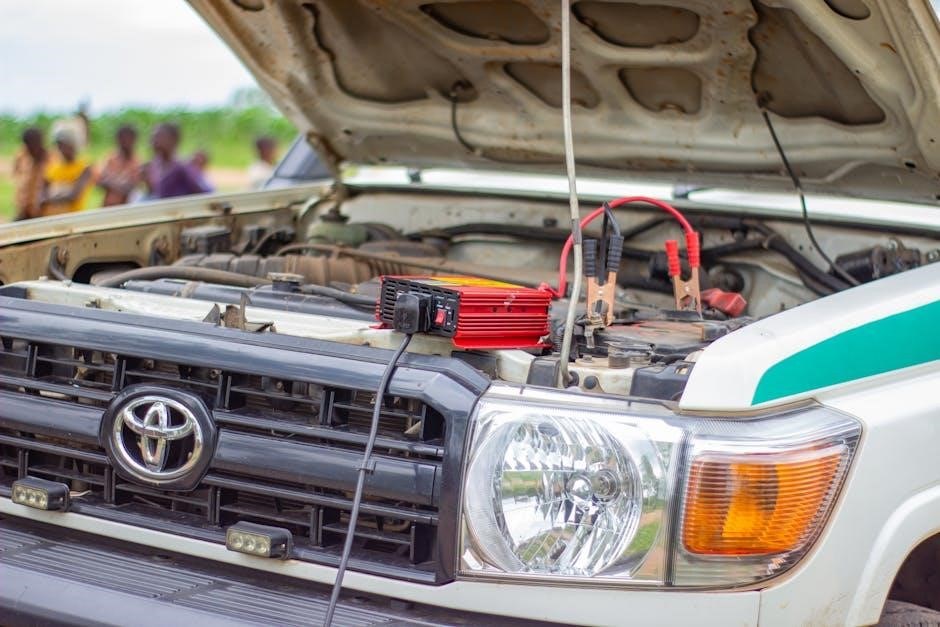
To stop the engine, gently apply the brakes to bring the vehicle to a complete stop, shift the gear selector to Park (P), and then press the engine start/stop button. Always allow the engine to idle briefly before shutting it off, especially after extended periods of operation. The manual also outlines procedures for emergency engine stops and jump-starting the vehicle if the battery is depleted, ensuring driver preparedness in various situations.
Driving Modes and Transmission
The 2017 Toyota Highlander manual details the vehicle’s driving modes and transmission operation. Most models feature a smooth-shifting automatic transmission, with options for manual gear selection via the shift lever. The manual explains how to utilize these features for optimal performance and fuel efficiency.
Depending on the trim level, the Highlander may offer selectable driving modes – such as Eco, Sport, and Normal – which adjust throttle response and transmission shift points. The manual clarifies the purpose of each mode and when to use them. It also provides guidance on proper shifting techniques and explains the function of the overdrive cancel button, allowing drivers to tailor the driving experience to their preferences and road conditions.
Fueling and Fluid Checks
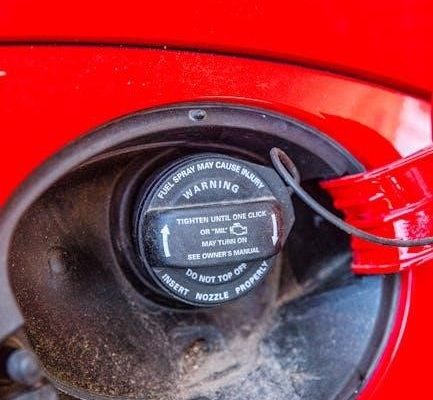
The 2017 Toyota Highlander manual provides detailed instructions for safe and efficient fueling procedures, including fuel type recommendations – typically unleaded gasoline. It emphasizes the importance of checking fluid levels regularly to maintain optimal vehicle performance and prevent damage.
The manual outlines how to check engine oil, coolant, brake fluid, power steering fluid, and windshield washer fluid. It specifies the correct fluid types for each system and provides clear diagrams illustrating the location of dipsticks and reservoirs. Regular fluid checks, as described in the manual, are crucial for identifying potential leaks or low levels, ensuring the longevity and reliability of the Highlander.
Maintenance and Care
Toyota Highlander’s manual details a scheduled maintenance program, covering tire care, fluid replacements, and essential checks for lasting vehicle health and performance.
Scheduled Maintenance Schedule
The 2017 Toyota Highlander owner’s manual provides a detailed schedule for maintaining optimal vehicle performance and longevity. Regular inspections are crucial, beginning with checks at 5,000 miles, focusing on essential fluids like engine oil and coolant. Further services at 15,000 miles include cabin air filter replacement and brake pad inspections.
At 30,000 miles, the manual recommends air filter replacement, along with more thorough brake system evaluations. Subsequent intervals at 60,000 and 100,000 miles necessitate spark plug replacement, drive belt inspections, and coolant flushing. Adhering to this schedule, as outlined in the manual, ensures reliable operation and helps prevent costly repairs, maximizing the lifespan of your Highlander.
Tire Maintenance and Replacement
The 2017 Toyota Highlander owner’s manual emphasizes proper tire care for safety and performance. Regularly check tire pressure – including the spare – and inflate to the recommended PSI found on the driver’s side doorjamb. Inspect tires for wear, damage, and uneven tread patterns. Rotate tires every 5,000 miles to promote even wear and extend their lifespan, as detailed in the manual.
The manual also specifies correct tire sizes and load ratings. Replacement tires should match these specifications. Tread depth is critical; replace tires when they reach 2/32 of an inch. Proper alignment is essential to prevent premature wear. Following these guidelines, outlined in the manual, ensures optimal handling, braking, and fuel efficiency for your Highlander.
Fluid Levels and Replacements
The 2017 Toyota Highlander manual details crucial fluid maintenance. Regularly check engine oil, coolant, brake fluid, power steering fluid, and windshield washer fluid levels. The manual specifies recommended fluid types for each system – using the incorrect fluid can cause damage. Scheduled replacements are vital; the manual outlines intervals for oil changes, coolant flushes, and transmission fluid changes.
Ignoring fluid maintenance can lead to component failure and costly repairs. The manual provides clear instructions on how to safely check and top off fluids. It also details the proper disposal methods for used fluids, emphasizing environmental responsibility. Adhering to the manual’s fluid maintenance schedule ensures the longevity and reliable operation of your Highlander.

In-Depth Systems
The 2017 Toyota Highlander manual thoroughly explains the audio, navigation, and climate control systems, providing detailed operational instructions and troubleshooting guidance.
Audio and Infotainment System
The 2017 Toyota Highlander’s audio and infotainment system, detailed within the owner’s manual, offers a range of features designed for convenience and enjoyment. Users can explore functionalities like AM/FM radio, CD player compatibility, and auxiliary/USB inputs for connecting external devices. The manual provides step-by-step instructions on Bluetooth pairing for hands-free calling and audio streaming.
Furthermore, it explains the operation of the touchscreen display, including navigation through menus, adjusting audio settings (bass, treble, balance, and fader), and utilizing voice command features. The manual also covers troubleshooting common issues, such as connectivity problems or display malfunctions. Detailed diagrams and explanations ensure users can maximize the system’s capabilities for a superior in-vehicle experience.
Navigation System Operation
The 2017 Toyota Highlander’s navigation system, thoroughly explained in the owner’s manual, provides detailed guidance for route planning and on-road assistance. The manual outlines how to input destinations using address, points of interest, or coordinates. It details map display options, including 2D and 3D views, and explains how to customize settings like route preferences (fastest, shortest, or avoiding tolls).
Users will find instructions on utilizing voice guidance, traffic updates, and rerouting capabilities. The manual also covers map updates, ensuring the system has the latest road information. Troubleshooting sections address common issues like GPS signal loss or incorrect map displays, empowering owners to navigate confidently and efficiently.
Climate Control System
The 2017 Toyota Highlander’s climate control system, detailed in the owner’s manual, offers multi-zone temperature control for driver, passenger, and rear occupants. The manual explains operation of the automatic temperature control, allowing for set-and-forget comfort. It covers manual adjustments for fan speed, air distribution (face, feet, defrost), and air conditioning intensity.
Detailed instructions are provided for utilizing features like recirculation mode, which improves cooling efficiency, and the defrost function for quick windshield clearing. The manual also addresses maintenance, such as cabin air filter replacement, and troubleshooting common issues like insufficient cooling or unusual odors, ensuring optimal comfort for all passengers.
Troubleshooting and Emergency
The 2017 Toyota Highlander manual details solutions for common issues and provides crucial emergency procedures, including roadside assistance contact information for peace of mind.
Common Issues and Solutions
The 2017 Toyota Highlander owner’s manual addresses frequently encountered problems. A reported issue involves abnormal squeaking noises originating from the rear suspension when driving over uneven road surfaces. The manual guides owners through preliminary checks, suggesting inspection of suspension components and potential tightening of related bolts.
Other potential concerns, though not explicitly detailed in the snippets, likely include issues with the audio/infotainment system, navigation system glitches, or climate control malfunctions. The manual emphasizes consulting a qualified Toyota technician for complex repairs. It also stresses the importance of proper fluid level maintenance to prevent engine or transmission problems. Regularly checking and topping off fluids, as outlined in the maintenance section, can mitigate many common issues.
Emergency Procedures
The 2017 Toyota Highlander owner’s manual provides crucial guidance for emergency situations. While specific details aren’t fully available in the provided text, it’s reasonable to assume the manual covers procedures for events like breakdowns, accidents, and medical emergencies. It likely details how to safely pull over, activate hazard lights, and warn other drivers.
Information regarding roadside assistance is also expected, including contact numbers and procedures for requesting help. The manual probably outlines steps for handling a vehicle fire, including safely evacuating passengers and using a fire extinguisher. Furthermore, it likely contains instructions for jump-starting the vehicle and dealing with flat tires. Owners should familiarize themselves with these procedures before an emergency occurs to ensure a swift and safe response.
Roadside Assistance Information
The 2017 Toyota Highlander owner’s manual is expected to contain vital roadside assistance details. Though the provided snippets don’t explicitly state contact information, Toyota generally offers comprehensive roadside assistance programs to its vehicle owners. This typically includes services like towing, jump starts, tire changes, fuel delivery (if stranded), and lockout assistance.
The manual likely details how to access these services, potentially including a dedicated phone number and online resources. It may also outline what information is needed when requesting assistance, such as the vehicle’s VIN and location. Understanding the scope of coverage and associated costs (if any) is crucial. Owners should locate this section within the manual and keep the contact information readily available for peace of mind during unexpected breakdowns.
Technical Specifications
Toyota Highlander (2017) specifications, including engine details, dimensions, capacities, and towing capabilities, are thoroughly documented within the official owner’s manual.
Engine Specifications
The 2017 Toyota Highlander offered several engine options, meticulously detailed within the owner’s manual. The standard engine was a 2.7-liter four-cylinder producing 185 horsepower and 184 lb-ft of torque. A popular upgrade was the 3.5-liter V6 engine, delivering 295 horsepower and 263 lb-ft of torque.
For those seeking enhanced fuel efficiency, a hybrid powertrain combining a 3.5-liter V6 with an electric motor was also available. This hybrid system generated a combined output of 306 horsepower. The manual provides precise specifications for each engine, including compression ratios, valve train configurations, and recommended fuel types. Detailed information regarding engine oil capacity and type is also included, ensuring optimal performance and longevity. Understanding these specifications is crucial for proper maintenance and repair.
Dimensions and Capacities
The 2017 Toyota Highlander’s dimensions and capacities are thoroughly outlined in the owner’s manual. Its overall length measures 192.5 inches, with a width of 76 inches and a height ranging from 68.1 to 68.6 inches, depending on the configuration. Wheelbase is 110.6 inches, contributing to a stable ride.
Inside, passenger volume reaches up to 123.1 cubic feet, accommodating up to eight passengers. Cargo capacity is substantial, offering 13.8 cubic feet behind the third row, expanding to 42.3 cubic feet with the third row folded, and a generous 83.7 cubic feet with both rear rows stowed. Fuel tank capacity is 19.2 gallons. The manual also details weight specifications, including curb weight and Gross Vehicle Weight Rating (GVWR), vital for safe operation and towing.
Towing Capacity
The 2017 Toyota Highlander owner’s manual provides crucial details regarding its towing capacity, a key consideration for owners planning to haul trailers or other equipment. When properly equipped – specifically with the V6 engine and optional towing package – the Highlander boasts a maximum towing capacity of 5,000 pounds.
The manual emphasizes the importance of adhering to these limits to ensure safe operation and prevent damage to the vehicle. It details specific requirements for the towing package, including the addition of a heavy-duty radiator and transmission cooler. Furthermore, it outlines proper trailer weight distribution, hitch selection, and braking considerations. Always consult the manual before towing to understand the specific limitations and recommendations for your Highlander’s configuration.

Warranty Information
The 2017 Toyota Highlander manual details comprehensive warranty coverage, including claim procedures, ensuring owners understand their rights and available support options.

Warranty Coverage Details
The 2017 Toyota Highlander’s warranty, as outlined in the owner’s manual, provides peace of mind with several coverage components. Typically, this includes a basic warranty covering repairs for a specified period or mileage, whichever comes first. A powertrain warranty often extends beyond the basic coverage, focusing on critical engine and transmission components.
Furthermore, corrosion and emissions warranties are standard, protecting against rust and defects in emissions control systems. The manual clearly defines what is covered, exclusions, and the process for submitting a warranty claim. Owners should carefully review the terms and conditions to understand their rights and responsibilities. Maintaining proper vehicle maintenance, as detailed in the manual, is crucial for warranty validity.
Claim Procedures
To initiate a warranty claim for your 2017 Toyota Highlander, consult the detailed procedures outlined within the owner’s manual. Generally, the process begins with contacting an authorized Toyota dealership’s service department. A qualified technician will diagnose the issue and determine if it’s covered under warranty.
Required documentation typically includes proof of ownership, maintenance records (demonstrating adherence to the manual’s schedule), and a detailed description of the problem. The dealership will submit the claim to Toyota for approval. Upon approval, repairs will be performed using genuine Toyota parts. The manual also details procedures for appealing a denied claim, ensuring owner recourse;